
Revision Spine Surgery
Revision spine surgery is performed when a previous spinal procedure does not achieve the desired outcome or when new spinal problems develop after the initial surgery. Patients may continue to experience persistent pain, nerve compression, spinal instability, or complications related to implants. Modern Minimally Invasive Spine Surgery (MISS) techniques, including endoscopic and robotic-assisted procedures, allow surgeons to address these complex cases with greater precision, minimal tissue damage, and improved recovery outcomes.
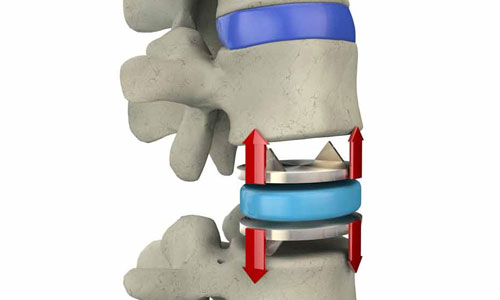
What is Revision Spine Surgery?
Revision spine surgery refers to a secondary surgical procedure performed to correct or improve the results of a previous spine surgery. These procedures are often more complex due to scar tissue formation, altered anatomy, or the presence of spinal implants. Advanced minimally invasive techniques help surgeons safely access the affected area and perform necessary corrections.
Common Reasons for Revision Spine Surgery
- Persistent or Recurrent Disc Herniation – Reappearance of slipped disc causing nerve compression.
- Failed Back Surgery Syndrome (FBSS) – Continued pain after previous spinal surgery.
- Spinal Instability – Weakness or abnormal movement in spinal segments.
- Implant or Hardware Problems – Loosening or displacement of screws, rods, or plates.
- Adjacent Segment Disease – Degeneration occurring in spinal levels next to a previous fusion.
- Scar Tissue Formation – Post-surgical scar tissue causing nerve irritation.
Symptoms That May Require Revision Surgery
- Persistent back or neck pain after previous surgery
- Recurring leg or arm pain (radiculopathy)
- Numbness, tingling, or weakness
- Difficulty walking or performing daily activities
- Spinal instability or abnormal movement
Diagnosis
Accurate diagnosis is essential before considering revision surgery. Doctors perform a detailed clinical assessment along with imaging tests such as X-rays, MRI scans, and CT scans to evaluate the previous surgical site, spinal alignment, nerve compression, and the condition of implants.
Minimally Invasive Revision Spine Surgery
Advances in spine surgery technology allow many revision procedures to be performed using minimally invasive approaches. These techniques reduce surgical trauma while providing better visualization and precision during complex corrective procedures.
Using endoscopic spine surgery and robotic-assisted spinal systems, surgeons can accurately remove scar tissue, correct hardware issues, decompress nerves, and stabilize the spine.
Advanced Surgical Techniques
- Endoscopic Spine Surgery – Minimally invasive technique using a small camera to access the spine.
- Robotic-Assisted Spine Surgery – Robotic guidance for precise implant placement and spinal correction.
- Minimally Invasive Decompression – Removal of pressure from spinal nerves.
- Spinal Fusion & Stabilization – Reinforcement of spinal segments to restore stability.
Benefits of Minimally Invasive Revision Surgery
- Smaller incisions and minimal muscle disruption
- Reduced surgical trauma
- Lower risk of infection
- Less blood loss
- Shorter hospital stay
- Faster recovery and rehabilitation
Final Thoughts
Revision spine surgery can help patients who continue to experience pain or complications after a previous spinal procedure. With modern minimally invasive spine surgery techniques, including endoscopic and robotic-assisted technologies, surgeons can perform complex corrective procedures safely and effectively. Early evaluation and proper treatment planning are essential to restore spinal stability, relieve pain, and improve quality of life.