Aneurysms & Vascular Malformations
Brain aneurysms and vascular malformations are abnormal conditions affecting the blood vessels of the brain. These conditions can disrupt normal blood flow and may lead to serious complications such as brain hemorrhage or stroke if left untreated. With modern Neurointervention (Endovascular Neurosurgery) techniques, many of these vascular abnormalities can now be treated using minimally invasive procedures that access the brain through blood vessels rather than open surgery.
Endovascular treatments allow specialists to precisely repair damaged blood vessels, prevent rupture, and restore healthy blood circulation while minimizing surgical risks and recovery time.
What is a Brain Aneurysm?
A brain aneurysm is a weakened or bulging area in the wall of a blood vessel in the brain. Over time, the pressure of blood flow can cause the vessel wall to balloon outward. If the aneurysm ruptures, it can lead to subarachnoid hemorrhage, a life-threatening form of brain bleeding that requires immediate medical attention.
What are Vascular Malformations?
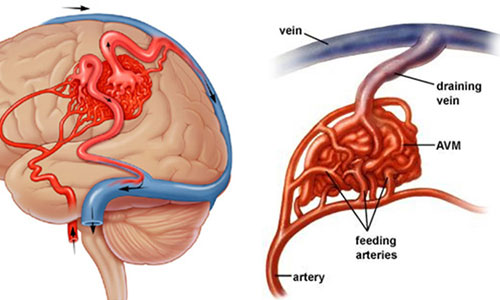
Vascular malformations are abnormal connections between blood vessels in the brain. These conditions are often present from birth and can interfere with normal blood circulation.
- Arteriovenous Malformation (AVM) – Direct abnormal connection between arteries and veins.
- Dural Arteriovenous Fistula (DAVF) – Abnormal connection between arteries and veins in the covering of the brain.
- Cavernous Malformation – Cluster of abnormal blood vessels that can cause bleeding.
- Venous Malformations – Abnormal vein structures affecting blood flow.
Common Symptoms
Some aneurysms and vascular malformations may not cause symptoms until they grow larger or rupture. Possible symptoms include:
- Severe or sudden headache
- Vision problems or double vision
- Nausea and vomiting
- Seizures
- Weakness or numbness in parts of the body
- Difficulty speaking or confusion
Diagnosis
Advanced imaging techniques are used to detect aneurysms and vascular malformations and evaluate their size, location, and risk of rupture.
- CT Scan – Detects bleeding or structural abnormalities in the brain
- MRI Scan – Provides detailed imaging of brain tissue
- CT Angiography (CTA) – Visualizes blood vessels in the brain
- Cerebral Angiography – Gold standard imaging for detailed vascular evaluation
Endovascular Treatment Options
Many brain aneurysms and vascular malformations can now be treated through endovascular procedures. A thin catheter is inserted through a blood vessel (usually in the groin or wrist) and guided to the affected brain vessel using real-time imaging.
- Aneurysm Coiling – Soft platinum coils are placed inside the aneurysm to prevent rupture.
- Flow Diverter Stents – Specialized stents redirect blood flow away from the aneurysm.
- AVM Embolization – Injection of special materials to block abnormal blood vessels.
- Endovascular Vessel Repair – Reconstruction of damaged blood vessels.
Benefits of Endovascular Neurointervention
- Minimally invasive treatment approach
- No large surgical incisions
- Reduced risk of complications
- Shorter hospital stay
- Faster recovery compared to open brain surgery
Final Thoughts
Brain aneurysms and vascular malformations are serious neurological conditions that require timely diagnosis and expert treatment. Modern neurointervention techniques allow specialists to treat these conditions safely and effectively through minimally invasive endovascular procedures. Early detection and appropriate management help reduce the risk of bleeding, stroke, and long-term neurological complications.