
Extracranial Carotid Artery Stenting
Extracranial Carotid Artery Stenting is an advanced Neurointervention (Endovascular Neurosurgery) procedure used to treat narrowing of the carotid arteries located in the neck. These arteries are responsible for supplying oxygen-rich blood to the brain. When plaque buildup causes narrowing or blockage, it significantly increases the risk of stroke.
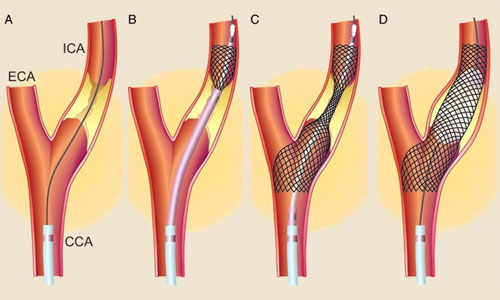
This minimally invasive procedure involves placing a small mesh-like stent inside the carotid artery to widen the narrowed area and restore normal blood flow to the brain. The procedure is performed using catheter-based techniques and advanced imaging guidance, eliminating the need for open surgery.
What is Carotid Artery Disease?
Carotid artery disease occurs when fatty deposits (plaques) accumulate inside the carotid arteries. This condition reduces blood flow to the brain and may lead to serious complications such as ischemic stroke or transient ischemic attacks (TIAs), commonly known as mini-strokes.
Common Causes of Carotid Artery Narrowing
- Atherosclerosis (plaque buildup in arteries)
- High blood pressure
- High cholesterol levels
- Diabetes
- Smoking
- Obesity and sedentary lifestyle
- Family history of vascular disease
Symptoms of Carotid Artery Disease
Many patients may not experience symptoms until the artery becomes significantly narrowed or a stroke occurs. Warning signs may include:
- Sudden weakness or numbness in the face, arm, or leg
- Difficulty speaking or understanding speech
- Sudden loss of vision in one eye
- Dizziness or loss of balance
- Sudden severe headache
- Transient ischemic attacks (mini-strokes)
Diagnosis
Early detection of carotid artery disease is crucial to prevent stroke. Doctors use several imaging tests to evaluate the severity of arterial narrowing.
- Carotid Doppler Ultrasound – Non-invasive test to measure blood flow in carotid arteries
- CT Angiography (CTA) – Detailed imaging of blood vessels
- MR Angiography (MRA) – Advanced imaging of brain and neck arteries
- Cerebral Angiography – Gold standard imaging technique for vascular evaluation
Carotid Artery Stenting Procedure
During the procedure, a thin catheter is inserted through a blood vessel in the groin or wrist and guided to the narrowed carotid artery using real-time imaging.
A small balloon may be used to widen the narrowed segment, followed by placement of a stent that supports the artery walls and keeps the vessel open. This restores healthy blood circulation to the brain and helps prevent future strokes.
Benefits of Endovascular Carotid Stenting
- Minimally invasive procedure
- No large surgical incisions
- Improved blood flow to the brain
- Reduced risk of stroke
- Shorter hospital stay
- Faster recovery compared to traditional surgery
Post-Procedure Care
After carotid artery stenting, patients are closely monitored to ensure proper blood flow and prevent complications. Medications may be prescribed to prevent blood clots and maintain healthy circulation. Regular follow-up and imaging studies help ensure long-term treatment success.
Final Thoughts
Extracranial carotid artery stenting is an effective neurointervention procedure for treating carotid artery disease and preventing stroke. With minimally invasive endovascular techniques, patients can receive precise treatment with faster recovery and improved long-term brain health.