
Brain Aneurysm Coiling & Flow Diverters
Brain aneurysm coiling and flow diverter treatment are advanced procedures performed under Neurointervention (Endovascular Neurosurgery) to treat weakened or bulging blood vessels in the brain known as aneurysms. These minimally invasive techniques help prevent aneurysm rupture and reduce the risk of life-threatening brain hemorrhage without the need for open brain surgery.
Using catheter-based technology and real-time imaging, specialists can access the aneurysm through blood vessels and treat it with highly precise devices such as platinum coils or flow diverter stents.
What is a Brain Aneurysm?
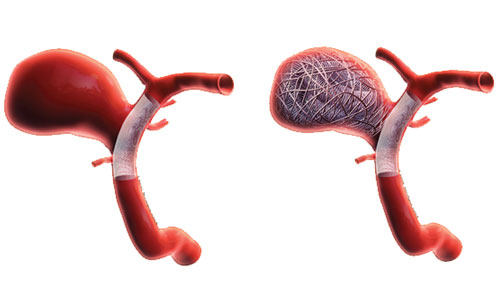
A brain aneurysm occurs when a weakened area in a blood vessel wall balloons outward due to blood pressure. If an aneurysm ruptures, it can cause a serious type of brain bleeding called subarachnoid hemorrhage, which is a medical emergency.
Early detection and treatment of aneurysms are crucial to prevent rupture and protect brain function.
Symptoms of Brain Aneurysm
Many aneurysms remain silent until they grow larger or rupture. Possible symptoms may include:
- Severe or sudden headache
- Blurred or double vision
- Pain around or behind the eye
- Nausea and vomiting
- Seizures
- Weakness or numbness in the face or limbs
- Loss of consciousness (in case of rupture)
Diagnosis
Advanced imaging techniques are used to detect and evaluate brain aneurysms.
- CT Scan – Detects bleeding or brain abnormalities
- MRI Scan – Provides detailed imaging of brain structures
- CT Angiography (CTA) – Visualizes blood vessels in the brain
- Cerebral Angiography – Gold standard imaging for aneurysm evaluation
Endovascular Treatment Options
Endovascular procedures treat aneurysms by accessing the brain through the blood vessels using a thin catheter inserted from the groin or wrist. This approach avoids large surgical incisions and allows highly targeted treatment.
- Aneurysm Coiling – Soft platinum coils are inserted into the aneurysm sac to block blood flow and promote clot formation, preventing rupture.
- Flow Diverter Stents – A specialized stent placed inside the parent artery to redirect blood flow away from the aneurysm, allowing the vessel wall to heal over time.
Benefits of Endovascular Aneurysm Treatment
- Minimally invasive procedure
- No open brain surgery required
- Reduced surgical risks
- Shorter hospital stay
- Faster recovery time
- Effective prevention of aneurysm rupture
Post-Procedure Care
After the procedure, patients are monitored closely to ensure proper blood flow and healing. Medications may be prescribed to prevent clot formation and maintain vascular health. Follow-up imaging studies are performed to confirm the success of the treatment.
Final Thoughts
Brain aneurysm coiling and flow diverter treatment represent significant advancements in neurointervention. These minimally invasive procedures allow specialists to treat aneurysms safely and effectively while reducing the risks associated with traditional surgery. Early diagnosis and timely treatment play a vital role in preventing life-threatening brain hemorrhage and preserving neurological health.